Humane squirrel trapping, complete exclusion, and attic restoration from NWCOA-certified professionals. Stop the chewing before it becomes a fire hazard.
Eastern gray squirrels and fox squirrels are among the most common wildlife nuisances in Jacksonville homes. These agile climbers easily scale trees, fences, and utility lines to access rooflines, where they chew through soffits, fascia boards, gable vents, and attic fans to establish nesting sites inside your attic.
Squirrels are active during daylight hours — if you hear scurrying, scratching, or gnawing sounds in your attic during the morning or afternoon, squirrels are the most likely culprit (rats are nocturnal). Infestations peak during two nesting seasons: late winter (January–February) and midsummer (June–July), when females seek protected spaces to raise their young.
Jacksonville neighborhoods with mature tree canopies — including Mandarin, San Marco, Riverside, Ponte Vedra Beach, and Julington Creek — are especially vulnerable. Squirrels can leap 8–10 feet between trees and structures, meaning any branch within range of your roof is a potential highway into your attic.
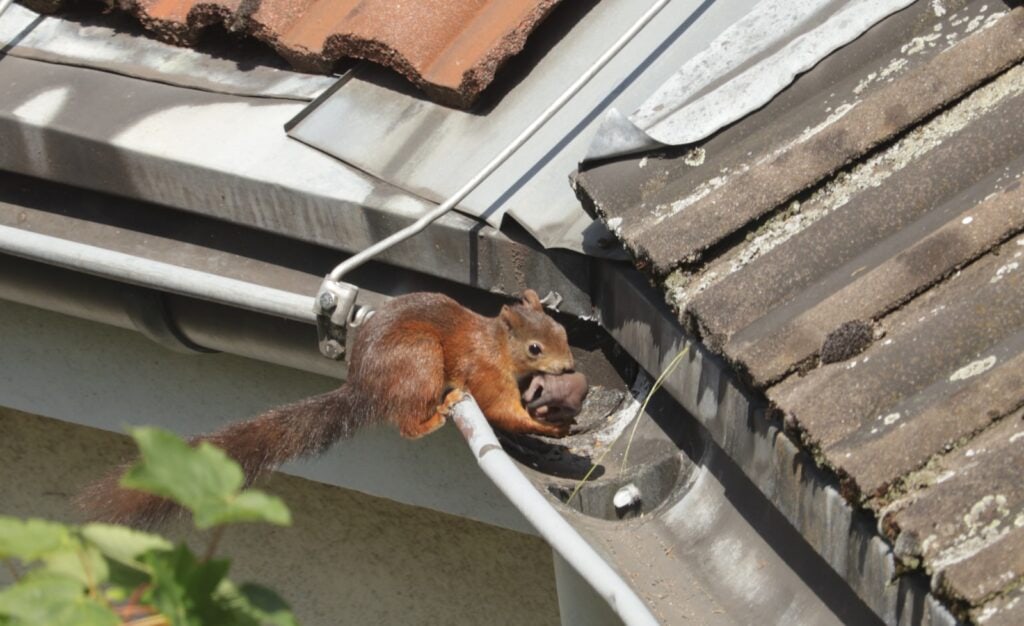
The most serious risk. Squirrels compulsively gnaw on electrical wiring, and the NFPA documents rodent-chewed wiring as a cause of residential fires. A single chewed wire behind a wall can smolder undetected.
Entry holes in your soffit or roof allow rain and moisture inside, leading to wood rot, mold growth, and ceiling stains.
Squirrels shred attic insulation for nesting material, reducing energy efficiency and increasing utility costs.
Squirrels have been known to gnaw through plastic plumbing pipes, causing leaks.
Nesting material and droppings in or near ductwork can contaminate the air circulating through your home.
Prevention steps for homeowners:
Humane removal plus exclusion that squirrels can't chew through:
We inspect your entire roofline, soffit, fascia, gable vents, and attic to locate every entry point, assess damage, and check for baby squirrels.
A combination of live traps and one-way exclusion devices lets squirrels leave the attic naturally but prevents re-entry — no animals are harmed.
Once all squirrels are out, we seal every entry point and vulnerable area with galvanized steel mesh, metal flashing, and heavy-gauge hardware cloth that squirrels cannot chew through.
We evaluate chewed wiring, damaged insulation, and structural compromise. We can coordinate electrical inspection referrals and replace contaminated insulation with TAP® pest-control insulation.
We return to confirm all squirrel activity has stopped and exclusion is holding. Our 2-week guarantee covers any issues at no additional cost.
Certified by the National Wildlife Control Operators Association — the industry's gold standard.
Fully licensed by the State of Florida with comprehensive liability insurance.
One-way exclusion and live trapping — mothers and babies are never separated.
Galvanized steel and metal flashing — not the wood or plastic patches that DIY fixes rely on.
Removal, repair, insulation restoration, and prevention — one call handles everything.
A Jacksonville-based company that knows the tree-canopy neighborhoods squirrels love.
We heard scratching every morning for weeks. They found the babies, got the whole family out together, and metal-sealed every gap along the roofline. Haven't heard a thing since.
Every day they stay is another day of chewing damage. Call (904) 375-7736 or schedule your free inspection.
Timing is the biggest clue. Squirrels are active during the day (especially early morning), while rats are nocturnal. Squirrel entry holes also tend to be larger (2–3 inches) with visible gnaw marks. Our technicians confirm the species during inspection.
Costs depend on the number of entry points, extent of damage, and whether insulation replacement is needed. We provide a transparent quote after your free inspection. Financing is available through Wisetack.
Not if exclusion is done with proper materials. Squirrels are persistent chewers, which is why we use galvanized steel and metal — not wood or plastic — to seal entry points.
Attic infestations peak during two nesting seasons: late winter (January–February) and midsummer (June–July). However, squirrels can enter attics any time of year in Jacksonville’s mild climate.
Squirrels cannot chew through galvanized steel mesh or metal flashing, which is why we use these materials for exclusion. They can chew through wood, plastic, aluminum screening, and even some softer metals — which is why DIY patches often fail.
Coastal Wildlife & Pest Control Services provides professional squirrel removal and attic proofing throughout Northeast Florida.
Every day squirrels stay is more damage. Call us or schedule your free inspection online today. Financing available through Wisetack.