Safe, humane, and Florida-compliant bat exclusion from NWCOA-certified wildlife professionals. Guano cleanup and full attic restoration included.
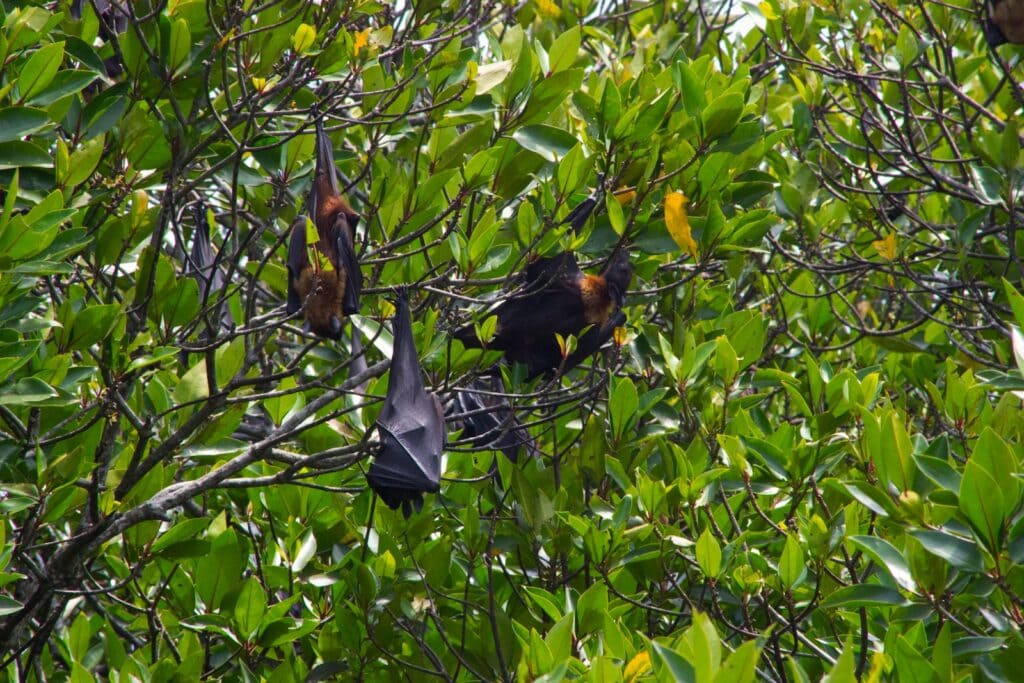
Northeast Florida is home to 13 bat species, and several of them commonly roost in residential structures. The most frequent attic invaders in the Jacksonville area are the Brazilian free-tailed bat and the evening bat, both of which form colonies that can number in the dozens — or even hundreds. Bats enter homes through surprisingly small gaps. An opening as narrow as 3/8 of an inch — roughly the width of a dime — is enough for most bat species to squeeze through. Common entry points include ridge cap vents, gable vents, gaps behind fascia boards, and openings around chimney flashing. Older homes in Riverside, San Marco, and the Beaches communities are especially vulnerable due to aging rooflines. Bats are most active in Jacksonville from March through October. During warmer months they leave roosts at dusk to feed on insects — a single bat can eat up to 1,000 mosquitoes per hour. While bats provide valuable pest control outdoors, a colony roosting in your attic creates serious health, odor, and structural concerns.
While less than 1% of bats carry rabies, bats are the leading source of human rabies cases in the U.S. according to the CDC. Any bat found in living spaces should be treated as a potential exposure.
Bat guano harbors the fungus Histoplasma capsulatum. When dried guano is disturbed, airborne spores can cause a serious respiratory illness. The CDC identifies bat guano as a primary source of this infection.
Bat roosts attract bat bugs (similar to bed bugs), ticks, and mites that can migrate into living spaces.
Accumulated guano is corrosive. Over time it stains ceilings, damages insulation, compromises drywall, and creates conditions for mold growth.
We strongly advise against DIY bat removal:
Florida law protects bats during maternity season, which runs from April 15 through August 14 each year. During this period, the FWC prohibits the use of exclusion devices if flightless juvenile bats are present, because young bats cannot survive without their mothers.
What this means for you: If you discover a colony during maternity season, exclusion cannot legally begin until August 15 — but you can and should schedule an inspection now so exclusion begins the moment the legal window opens. Outside maternity season (August 15 through April 14), exclusion can proceed immediately. Safe, permanent bat removal requires professional inspection, proper exclusion devices, complete sealing, and hazmat-grade cleanup.
Humane, legal, and permanent — every step handled by licensed technicians:
We inspect your entire roof, attic, soffits, vents, and fascia to locate every entry point and assess colony size. We also check for maternity season restrictions.
One-way exclusion devices at primary entry points allow bats to leave naturally at dusk but prevent re-entry. No bats are harmed.
Every secondary gap, crack, and potential future entry point is sealed with professional-grade materials. Bats squeeze through dime-width gaps, so thoroughness is essential.
Once the colony has vacated, we remove all guano, sanitize affected surfaces, and eliminate odor. Contaminated insulation can be replaced with TAP® pest-control insulation.
We return to confirm the colony has fully departed and all exclusion work is holding. Our 2-week guarantee covers any issues at no cost.
Certified by the National Wildlife Control Operators Association — the industry's gold standard for ethical wildlife management.
Fully licensed by the State of Florida with comprehensive liability insurance.
Fully trained in Florida's bat maternity season regulations and humane exclusion methods.
One-way exclusion only — no bats are ever harmed in our process.
Exclusion, sealing, guano cleanup, and insulation restoration — one call handles everything.
A Jacksonville-based company serving our own community since day one.
We had no idea how the bats were getting in. Coastal found every gap, installed the exclusion devices, and handled the entire guano cleanup. The attic is spotless now.
Guano damage compounds daily. Schedule your free inspection today or call (904) 375-7736.
Costs depend on colony size, number of entry points, and the extent of guano contamination. We provide a detailed quote after your free inspection, and financing is available through Wisetack.
The exclusion device phase typically runs 5–14 days to ensure all bats have departed. Entry point sealing and guano cleanup can usually be completed within a week after that.
Yes. Bat guano is acidic and corrosive. Left untreated it stains ceilings, deteriorates drywall, damages insulation, and promotes mold growth. The longer a colony remains, the more extensive and expensive the damage.
Yes. Bats are protected under Florida law and removal must follow FWC guidelines. During maternity season (April 15–August 14), exclusion is restricted. Our technicians are fully trained in compliant, humane bat exclusion.
Do not touch the bat with bare hands. Close the room, open a window, and call us immediately at (904) 375-7736. If anyone has been bitten, scratched, or had direct contact, contact your doctor and local health department right away for rabies assessment.
Not if exclusion is done properly. Bats are loyal to roost sites and will attempt to return, which is why complete entry point sealing is critical. Our process seals every possible access point — not just the obvious ones.
Coastal Wildlife & Pest Control Services provides professional bat removal and exclusion throughout Northeast Florida.
Colonies grow quickly and guano damage compounds daily. Call us or schedule your free inspection online. Financing available through Wisetack.